Showing posts with label vocabulary. Show all posts

Sunday, 22 April 2018

VOCABULARY REVIEW


1. Complete the text with the words below.


caught on ¿ weird ¿ entertaining  ¿ came up with ¿ trendy ¿ requires

The Pet Rock was invented in 1975 by Gary Dahl. He 1. ……………………………… the idea while talking with friends about pets. He bought some rocks, put each one
in a nest in a small box, and included instructions for taking care of the rock. The instructions were very funny and 2.
………………………………  – because a rock, of course, 3. ……………………………… no care! As 4. ……………………………… as it seems, the Pet Rock quickly 5. ……………………………… and became really
6.
……………………………… . Everyone wanted one!

2  Choose the correct answers to show you understand the words in bold.

    1.   I’m using the cordless phone. I can’t / can take it into the other room.
    2.   It’s really hot. I’ll close the window and turn off / on the air conditioner.
    3.   If you keep / don’t keep fresh milk in the fridge, it will go bad.
    4.   I can’t hear / type very well on this mobile phone’s keyboard.
    5.   We had no electricity during the storm, so we used / couldn’t use the microwave oven.
    6.   Can you please take the plates / clothes out of the dishwasher?
    7.   Have you got any paper / maps for the printer?
    8.   Use the food processor to cook / cut the cabbage.

   3. Choose the correct answer.


    1.   There were no judges / witnesses to the murder.

    2.   Thieves broke into / identified our house last night while we were sleeping.

    3.   The driver obeyed / broke the law when he drove through a red light.

    4.   The jury committed the crime / found him guilty.

    5.   The witness identified / caused damage the thief. She remembered what he was wearing.

    6.   The burglar was sent to prison by the hooligan / judge.

    7.   The criminal was given a warning / witness by the police.

    8.   The police have found fingerprints at the scene of the crime / prison sentence.

    9.   During the riot / trial, the lawyer showed some surprising evidence.

  10.  The accused was very happy when he was found innocent / guilty of the crime.

4.Complete the text with the words below.


committed crimes ¿ damage was caused ¿ hooligans ¿ prison sentences ¿ riot
      Yesterday, there was a 1. …………………… on Mercer Street. Hundreds of people  were hurt. Serious 2. …………………… to shops in the area when a group of 3. …………………… broke windows and started fires. Ten teenagers were arrested. According to police, four of them have 4. …………………… in the past, so they could receive 5.
…………………… .

5. Complete the dialogues with the words below.

     in pain ¿ cuts ¿ dead ¿ unconscious ¿ escaped ¿ losing blood

    1.   A: Was anyone killed in the accident?

          B: Yes, three people are …………………… .

    2.   A: Were the burglars arrested?

          B: No, they …………………… before the police came.

    3.   A: How badly was Ben hurt?

          B: He’s broken his leg so he’s …………………… .

    4.   A: Can I talk to my father now?

          B: No, he’s …………………… . Try later. He may be awake then.

    5.   A: Was she injured?

          B: Yes. She’s …………………… . We must get her to hospital.

    6.   Detective: Did the robber break the window?

          Police officer: Yes, look at those …………………… on his hand. 

6.  Complete the sentences.

    1.   Some animals d … … … … … … e  t … … … … … … … … s when an e … … … y is near.
    2.   At night, gorillas b … … … … n … … … s in trees to sleep in.
    3.   How many babies does a tiger g … … … b … … … … to at one time?
    4.   Zebras run in groups as a way to d … … … … d  t … … … … … … … … s when
lions a … … … … k them.
    5.   If a p … … … … … … … s snake b … … … s you, you must get to hospital immediately.
    6.   How long can a person s … … … a … … … … without food?
    7.   My dog is usually h … … … … … … …, but he can be dangerous if he f … … … …
t … … … … … … … … d.

7. Complete the sentences with the singular or plural form of the words below.
beak ¿ trunk ¿ tusk ¿ scale ¿ wing ¿ jaw ¿ paw ¿ tail
    1.   A bird can’t fly with a broken …………………… .
    2.   …………………… are actually long front teeth.
    3.   Many fish have got colourful …………………… .
    4.   Some monkeys have got very long, strong …………………… .
    5.   My dog doesn’t like walking in the snow. His …………………… get cold.
    6.   An elephant uses its …………………… to eat and drink.
    7.   A bird’s …………………… is suited to the type of food it eats.
    8.   The hippo’s …………………… allows it to open its mouth to almost 180 degrees.


Wednesday, 13 January 2016

DESCRIBING PLACES

Let's review the vocabulary we use when we want to describe a place! Click on this link and have a look!

describing places


Wednesday, 28 October 2015

Wednesday, 14 October 2015

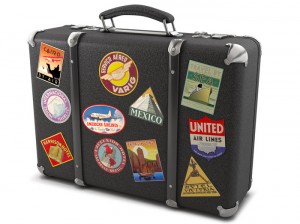
JOURNEY, TRAVEL OR TRIP?

THE WORDS TRAVEL, TRIP AND JOURNEY ARE USUALLY VERY CONFUSING FOR SPANISH STUDENTS OF ENGLISH, 

LET'S HAVE A LOOK AT THE MEANING AND USE OF THESE WORDS.

Trip (n.)


The act of going to another place (often for a short period of time) and returning.

  • We took a five-day trip to the Amazon.
  • You’re back from vacation! How was your trip?
  • I went on business trips to Switzerland and Germany last month.
Use the verbs “take” and “go on” with trip.

  • A round-trip ticket is a ticket for going and coming back.
  • A one-way ticket is only for going.

Travel (v.)

Going to another place (in general).

  • I really like to travel.
  • He travels frequently for work.
  • My sister is currently traveling through South America.
Travel (n.) can be used to describe the act of traveling in general:

  • Travel in that region of the country is dangerous.
  • World travel gives you a new perspective.

Incorrect uses of travel:


  • How was your travel?
    How was your trip?
  • I’m planning a travel to the U.S. next year.
    I’m planning to travel to the U.S. next year.
    I’m planning a trip to the U.S. next year.

Journey (n.)

One piece of travel (going from one place to another) – usually a long distance.

  • The journey takes 3 hours by plane or 28 hours by bus.
  • He made the 200-mile journey by bike.
  • “A journey of a thousand miles must begin with a single step” – Lao-tze, Tao Te Ching
We can also use journey in a more “metaphorical” way to talk about progress in life:

  • He has overcome a lot of problems on his spiritual journey.
  • My uncle is an alcoholic, but he’s beginning the journey of recovery.
  • LE'T PRACTICE THE DIFFERENCE NOW! 
  • TRAVELTRIPJOURNEY 

Tuesday, 6 October 2015

WHAT'S THE WEATHER LIKE TODAY?


Watch this video to learn some new words related to the weather. What's the weather like today in your town?

Saturday, 26 September 2015

THE "ROYAL" ORDER OF ADJECTIVES IN ENGLISH

Although in Spanish we can place adjectives ramdomly, in English they seem to follow a "royal" order which is sometimes difficult to learn... Have a look at this chart!


When talking about hair adjectives, the order is usually 

HAIR LENGTH ---HAIR STYLE----- HAIR COLOUR


WHAT DO THEY LOOK LIKE?

What do these famous people look like? Watch this power point presentation we've seen in class. Then, Choose three of them, include as many details as you can!

PHYSICAL DESCRIPTION

And now, can you match these pictures to the descriptions below?


WHAT ARE YOU LIKE?

 What are you like? Click on this link to review some adjectives related to personality description, and be sincere!

DESCRIBING PERSONALITY

Sunday, 5 October 2014

REMIND OR REMEMBER?


Remember means to 'have the memory of something', 'not forget something'. Remind means 'make somebody remember something'.
Remember significa tener el recuerdo de algo, no olvidar algo. Remind significa hacerle acordar a alguien de algo.
  • remember
    I don't remember you address.
    Remember that you have an appointment with the doctor today.
    I remember reading that book in school.

  • remind
    This place reminds me of home.
    Remind me that I have an appointment with the doctor today.
    That reminds me, I have to go to the bank.

  • Related words and expressions
    remembrance (n)
    : object that makes you remember something, souvenir
    reminder (n): note or object that prevents you from forgetting something
  • LET'S PRACTICE! 
  •  REMINDREMEMBER

WAIT, EXPECT OR HOPE?

WAIT, EXPECT OR HOPE?


Although they are translated the same way in Spanish, these verbs have different meanings:

Wait means that you do something until something else happens.
Expect means that you think that something will happen.
Hope means that you want something to happen.
Aunque se traducen igual en español, estos verbos tienen diferentes significados:
Wait significa que haces algo hasta que otra cosa suceda. Expect significa que piensas que algo ocurrirá. Hope significa que deseas que algo ocurra.
  • wait
    I'm waiting for the bus.
    Wait for me!
    I will wait until she comes back.

  • expect
    I expect to arrive in a week (you think you will).
    We didn't expect her to stay so long.
    They expect to finish the work next month.

  • hope
    I hope to arrive in a week (you are not certain but you want to).
    I hope everything goes well.
    I hope you come
  •  
  • NOW, HAVE A LOOK AT THESE EXERCISES TO SEE IF YOU'VE REALLY UNDERSTOOD! 
  •  WAITEXPECTHOPE
  • WAITEXPECTHOPE2 

Tuesday, 23 September 2014

Saturday, 15 March 2014

USEFUL INTERNET VOCABULARY

                                      Source: Real Engllish

Can you write your e-mail address into words? smith _12@gmail.com is smith undercore twelve at gmail dot com, and yours?

Tuesday, 11 February 2014

THE HOUSE

VOCABULARY: THE HOUSE
Here you have some useful vocabulary related to the house. Clink in the link above to listen to the pronunciation of some of these words.

Friday, 7 February 2014

WEATHER IDIOMS

January 2014 has been the wettest month in the South of England since records began in 1910. Let's learn some idioms related to the weather.

RAIN
1. it never rains but it pours - this idiom or proverb means that when one bad thing happens, other bad things will inevitably happen at the same time or quickly one after the other.
Example: I’ve had a horrible week. First I locked myself out of my house, then my car broke down, and today I missed my train to work and was late for an important meeting. It never rains but it pours!
2. take a rain check -  if you take a rain check on something you postpone it until another time. (informal English)
Example: I am really behind with work today. Can we take a rain check on that drink tonight?
CLOUDS
3. every cloud has a silver lining -  this idiom means that something good always comes from something bad, and there is always a reason to hope, even in the worst situations.
Example: Jane set up her baking school after she lost her job as on office administrator. The school has been a huge success and she has never been happier. I really believe that every cloud has a silver lining.

Have your head in the clouds
4. to have your head in the clouds - to be out of touch with reality: to have ideas and thoughts that are not sensible or practical.
Example: I despair of John. He thinks that getting a job without qualifications is easy these days. He really has his head in the clouds.

5. under a cloud - if someone is under a cloud they are suspected of having done something wrong.
Example: She left the company under a cloud after she was suspected of stealing.

6. on cloud nine – to be extremely happy
Example: I’ve just been promoted and received a pay rise. I am on cloud nine!
On cloud nine
On cloud nine
STORM
7. storm in a teacup – to make a big fuss about something of little importance
Example: They had a big argument but it was such a storm in a teacup.

A storm in a teacup
A storm in a teacup
8. the calm before the storm - this is the quiet or peaceful period just before a period of great activity, excitement or arguments.
Example: She sat down with a book and a cup of tea enjoying the calm before the storm when the children would return from school.

WIND

9. sail close to the wind - to do something that is dangerous or only just legal or socially acceptable.
Example: Jack is really sailing close to the wind with his comments about the CEO.
10. to get wind of - to find out about something, usually accidentally or from a confidential source.
Example: The police got wind of the plot to rob the bank.
11. a windfall - a sum of money that you win or receive from someone unexpectedly or from a bank that floats on the stockmarket.
Example: They went on a month-long cruise with the windfall they received from their bank.

under the weather
under the weather
WEATHER
12. under the weather – to be ill or to feel unwell
Example: I’m feeling under the weather today so I am going to stay in bed.
 From: www.englishwithatwist.com

HOW DO YOU EXPRESS THESE IDEAS IN SPANISH? DO YOU USE SIMILAR IDIOMS?