Have a glance at this great chart about preposition collocations in English. They may help you imporove your writing skills!
Showing posts with label common mistakes. Show all posts
Monday, 9 November 2015
PAST SIMPLE: REGULAR VERBS PRONUNCIATION
Do you know how to pronounce ED ending when forming regular past simple forms? Have a look at the green chart and practice reading these verbs aloud! Notice that we mustn't pronounce it /ed/.
I'm sure that's clear now...
Of all the regular verbs in the chart below (from www.realenglish.com) only 7 are pronounced /t/, the rest of them end in /d/ sound. Can you find these seven verbs?
I'm sure that's clear now...
Of all the regular verbs in the chart below (from www.realenglish.com) only 7 are pronounced /t/, the rest of them end in /d/ sound. Can you find these seven verbs?
Wednesday, 14 October 2015
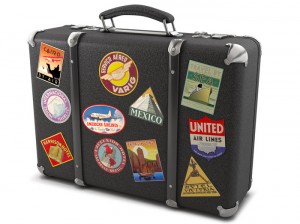
JOURNEY, TRAVEL OR TRIP?
THE WORDS TRAVEL, TRIP AND JOURNEY ARE USUALLY VERY CONFUSING FOR SPANISH STUDENTS OF ENGLISH,
LET'S HAVE A LOOK AT THE MEANING AND USE OF THESE WORDS.
Trip (n.)

The act of going to another place (often for a short period of time) and returning.
- We took a five-day trip to the Amazon.
- You’re back from vacation! How was your trip?
- I went on business trips to Switzerland and Germany last month.
- A round-trip ticket is a ticket for going and coming back.
- A one-way ticket is only for going.
Travel (v.)
Going to another place (in general).- I really like to travel.
- He travels frequently for work.
- My sister is currently traveling through South America.
- Travel in that region of the country is dangerous.
- World travel gives you a new perspective.
Incorrect uses of travel:
- How was your travel?
How was your trip? - I’m planning a travel to the U.S. next year.
I’m planning to travel to the U.S. next year.
I’m planning a trip to the U.S. next year.
Journey (n.)
One piece of travel (going from one place to another) – usually a long distance.- The journey takes 3 hours by plane or 28 hours by bus.
- He made the 200-mile journey by bike.
- “A journey of a thousand miles must begin with a single step” – Lao-tze, Tao Te Ching
- He has overcome a lot of problems on his spiritual journey.
- My uncle is an alcoholic, but he’s beginning the journey of recovery.
- LE'T PRACTICE THE DIFFERENCE NOW!
- TRAVELTRIPJOURNEY
Saturday, 26 September 2015
THE "ROYAL" ORDER OF ADJECTIVES IN ENGLISH
Although in Spanish we can place adjectives ramdomly, in English they seem to follow a "royal" order which is sometimes difficult to learn... Have a look at this chart!
When talking about hair adjectives, the order is usually
HAIR LENGTH ---HAIR STYLE----- HAIR COLOUR
Sunday, 5 October 2014
REMIND OR REMEMBER?
Remember means to 'have the memory of something', 'not forget something'.
Remind means 'make somebody remember something'.
Remember significa tener el recuerdo de algo, no olvidar algo.
Remind significa hacerle acordar a alguien de algo.
- remember
I don't remember you address.
Remember that you have an appointment with the doctor today.
I remember reading that book in school.
- remind
This place reminds me of home.
Remind me that I have an appointment with the doctor today.
That reminds me, I have to go to the bank.
- Related words and expressions
remembrance (n): object that makes you remember something, souvenir reminder (n): note or object that prevents you from forgetting something - LET'S PRACTICE!
- REMINDREMEMBER
WAIT, EXPECT OR HOPE?
Although they are translated the same way in Spanish, these verbs have different meanings:
Wait means that you do something until something else happens.
Expect means that you think that something will happen.
Hope means that you want something to happen.
Wait means that you do something until something else happens.
Expect means that you think that something will happen.
Hope means that you want something to happen.
Aunque se traducen igual en español, estos verbos tienen diferentes significados:
Wait significa que haces algo hasta que otra cosa suceda. Expect significa que piensas que algo ocurrirá. Hope significa que deseas que algo ocurra.
- wait
I'm waiting for the bus.
Wait for me!
I will wait until she comes back.
- expect
I expect to arrive in a week (you think you will).
We didn't expect her to stay so long.
They expect to finish the work next month.
- hope
I hope to arrive in a week (you are not certain but you want to).
I hope everything goes well.
I hope you come - NOW, HAVE A LOOK AT THESE EXERCISES TO SEE IF YOU'VE REALLY UNDERSTOOD!
- WAITEXPECTHOPE
- WAITEXPECTHOPE2
Sunday, 21 September 2014
COMMON MISTAKES IN ENGLISH: FUNNY VS FUN
The
words "fun" and "funny" seem like they could be the same, but they have
different meanings. A person or event can be fun but may not be funny.
Check out this graphic from Woodward English to learn the difference between the words fun and funny.
Do you think learning English is fun?
Subscribe to:
Posts (Atom)